Best Cenotes Near Merida Mexico: The 10 Worth the Drive
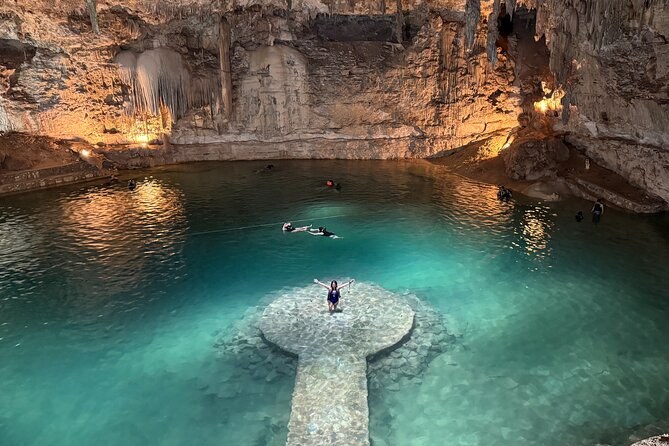
There are thousands of cenotes on this peninsula and about a dozen you can reasonably reach from Mérida in a day. They are not interchangeable: an open cenote and a fully enclosed cavern are different experiences, and the famous ones are famous for photographs rather than for swimming.
What is a cenote, and why are there so many here?
The northern Yucatán is a slab of porous limestone with almost no surface rivers. Rain drains straight through it and the water table runs underground in a network of flooded caves. Where a cave roof collapses, the water is exposed, and that hole is a cenote — from the Yucatec Maya ts'onot.
For the Maya they were the water supply and they were sacred, which is why so many sites are built beside one. Chichén Itzá's Sacred Cenote is the best-known example.
What are the three kinds, and which do you want?
Open. The roof has gone entirely; you are swimming in a round pool with trees around the rim and vines to the water. Brightest, warmest, busiest.
Semi-open. Part of the roof remains, so light comes through a hole above. This is the one that photographs.
Cavern. The roof is intact and you go down a stair into the dark, with stalactites overhead and artificial light. Coldest, quietest, strangest.
A good day out visits more than one kind, which is the argument for an organised trip over a single famous pool.
The ten, ranked by what they are actually good for
| Cenote | Where | From Mérida | Type | Best for |
|---|---|---|---|---|
| Santa Bárbara (three pools) | Homún | 1 hour | Open and cavern | The all-round day; you cycle between them |
| Cenote Suytún | Valladolid | 2 hours | Cavern | The stone-platform photograph, first thing |
| Cenote Ik Kil | By Chichén Itzá | 2 hours | Open | Bolting a swim onto a ruins day |
| Cenote San Lorenzo Oxman | Valladolid | 2 hours | Open | The rope swing, and a quieter alternative to Suytún |
| Cenote Pool Uinic | Homún | 1 hour | Cavern | Small, family-run, usually empty |
| Cenote Santa Rosa | Homún | 1 hour | Cavern | The one reviewers rate highest of the Homún three |
| Cenote San Antonio | Homún | 1 hour | Semi-open | The last stop on most Homún days |
| Cenote Real Dzonot | Valladolid | 2 hours | Semi-open | Added to the three-cenote Valladolid day |
| Cenote Peba | Near Uxmal | 1 hour 30 | Open | Cooling off after Uxmal and Kabah |
| Cenote Saamal | Valladolid | 2 hours | Open | Included on one private Chichén Itzá day |
Nine of those ten are visited by a day trip sold out of Mérida, which is unusual: most cenote lists are half aspiration. The cenote tours page shows which day reaches which.
Which cenotes are on an organised day out?
Homún, three pools, nine hours. Pool Uinic, Santa Rosa and San Antonio, with every entrance fee, lunch, a mask and a life jacket included.
Valladolid, three pools, twelve hours. Suytún, Oxman and Real Dzonot, with an hour and a half in the colonial town in the middle.
Santa Bárbara plus Acanceh, eight to nine hours. Four pools with bicycles between them and a Maya pyramid on a town square on the way out.
Everything else — Ik Kil, Peba, Saamal — is attached to a ruins day rather than being the day.
How much do the cenotes cost?
Individually, between about 100 and 200 pesos each, paid in cash at the gate to whichever ejido or family runs it. That adds up quickly across three pools, and it is why the fee-inclusive days are worth comparing on total cost rather than headline price.
Of the three cenote days out of Mérida, all three include the entrance fees. The ruins days that add a cenote are the mixed ones: Ik Kil is included on two Chichén Itzá trips, and Cenote Peba on the Uxmal and Kabah day is 100 pesos extra.
When is the best time of day to be in one?
First thing, for the same reason as the ruins. Suytún's shaft of light through the roof is a mid-morning phenomenon and the queue for the platform builds behind it; a reviewer describes having a Homún pool to a group of six and another describes two coachloads arriving while they were in the water.
The organised days leave Mérida at 07:00 or 08:00 precisely to be first. If you are driving yourself, aim to be at the first gate when it opens.
What should you bring, and what should you leave behind?
- Your swimsuit, already on. Several operators ask for this outright; the changing facilities are basic.
- Water shoes. The limestone at the edge is sharp and the stairs are wet.
- A towel and dry clothes, in a separate bag.
- Cash, if you are going independently.
- No sunscreen. One operator bans it entirely because it goes into the water table, and most cenotes ask you to rinse in their showers first.
Is Cenote Suytún worth the two-hour drive?
For the photograph, yes, if you are first in. The circular stone platform under the shaft of light is one of the most photographed things in Mexico and it is genuinely extraordinary at nine in the morning with nobody on it.
For the swim, no. It is cold, it is dark, and it is a queue by eleven. If the swimming is what you want rather than the picture, the Homún three are better and an hour closer.
Can you visit cenotes without a tour?
Around Valladolid, yes: take the ADO bus and a taxi between pools. Around Homún it is harder, because the cenotes are spread across a municipality with no transport between them and each charges its own cash fee.
The channel guide works through which destinations genuinely need a booking and which do not. Cenotes are one of the clearer cases for booking.
How cold is the water, really?
Cool rather than cold, and it barely changes through the year because it is underground and out of the sun. Expect it to be sharp for the first thirty seconds and perfectly comfortable after that. In a cavern cenote the air is cooler than the water, which is the opposite of what you expect.
In April and May, when the surface is over 36 °C, this is the single best place in the Yucatán to spend a day. The weather page has the numbers.
Are cenotes safe to swim in?
Yes, at the organised ones, and the safety comes from three things rather than from luck. Life jackets are compulsory in the water at most of them and are provided. The access is built — timber stairs, handrails, platforms — rather than improvised. And the pools that take visitors are supervised by the family or ejido that runs them.
What to actually watch for is more mundane. The limestone at the water's edge is sharp and often slick, which is what water shoes are for. Cavern cenotes are dark enough that you should stay where you can see the stair. And the depth is deceptive: clear water over a pale floor reads as shallow when it is ten metres.
Cave diving is a different activity with a different risk profile entirely, and none of the day trips out of Mérida involve it.
What lives in a cenote?
Small fish, mostly, and they will come and inspect your feet. Several of the Homún and Valladolid pools have shoals of them and it is a completely benign experience once you know it is coming.
Above the water there are usually swallows nesting in the roof of a cavern cenote, and bats in the deeper ones, which come out at dusk rather than while you are in. Vines and tree roots drop through the openings in the semi-open pools, sometimes forty metres, and they are part of what makes the photographs.
What there are not are crocodiles. Those are on the coast, in the mangroves at Celestún and Ría Lagartos, which is a separate day and a separate ecosystem — the flamingo guide covers that one.
Which day should you book?
If you want to swim: the Homún day. Three pools, every fee included, nine hours, and an hour's drive rather than two.
If you want the photograph: the Valladolid day, and be in the first group at Suytún.
If you want to be active: the Santa Bárbara day, which puts bicycles between the pools and a Maya pyramid at the start.
All three include lunch, all three refund in full up to 24 hours ahead, and all three are set out with their lengths on Merida Mexico Tours.
Frequently asked questions
Are the flamingos at Celestún there all year?
Can I swim with sunscreen on?
How early do the day trips leave Merida Mexico?
Do children pay?
The three cenote days
4 Cenotes Tour in Homún all inclusive from Merida
Three Homún cenotes with every entrance fee and lunch already paid.
From $87 per person
Check AvailabilityTour Valladolid, Cenote Suytun and Cenote Oxman from Mérida
Suytún, Oxman, Dzonot and an hour and a half in Valladolid.
From $99 per person
Check AvailabilityMerida : 4 Santa Barbara Cenotes and Bikes with Lunch
Cycle between four cenotes, with a Maya pyramid stop on the way out.
From $110 per person
Check Availability